History
From the era of Bhagwan Vrishabhnath to the times of Bhagwan Mahaveer Tirthankar, this Dharmapeeth of the Digambar Jain Arsha system has been relentlessly functioning through the support of several Acharyas in the past. It has been upholding the sacred tenets of Jain Dharma like a burning lamp. 625 years after the Moksh of Bhagwan Mahaveer, it was established in Delhi by a Jain monk in the name of Shri Lakshmisen Bhattarak Peeth for the purpose of spreading the message of Jain dharma and bringing the community together.
The Mathas were established by Digambar Sadhus in all four directions of India – Delhi in the North, Kolhapur in the west, Jinakanchi in South and Penagonda (Andhra Pradesh) in the East. All these four Mathas are part of the same Dharma Peeth and hence they all came to be known as ‘Shri Lakshmisen Matha’.
From the era of Bhagwan Vrishabhnath to the times of Bhagwan Mahaveer Tirthankar, this Dharmapeeth of the Digambar Jain Arsha system has been relentlessly functioning through the support of several Acharyas in the past. It has been upholding the sacred tenets of Jain Dharma like a burning lamp. 625 years after the Moksh of Bhagwan Mahaveer, it was established in Delhi by a Jain monk in the name of Shri Lakshmisen Bhattarak Peeth for the purpose of spreading the message of Jain dharma and bringing the community together.
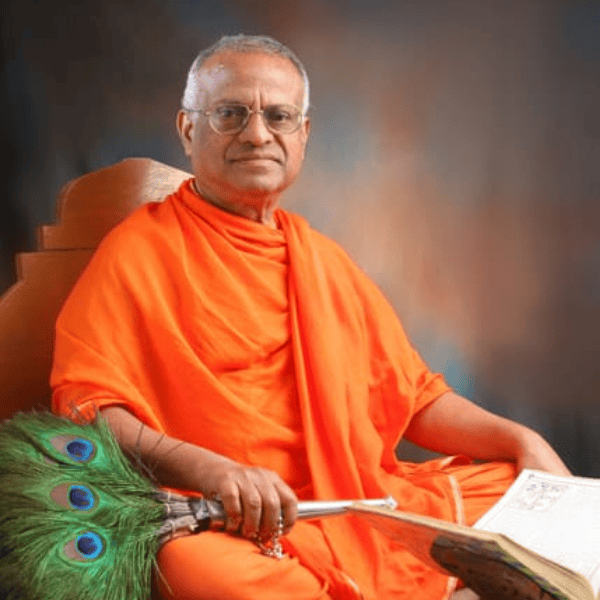
The Mathas were established by Digambar Sadhus in all four directions of India – Delhi in the North, Kolhapur in the west, Jinakanchi in South and Penagonda (Andhra Pradesh) in the East. All these four Mathas are part of the same Dharma Peeth and hence they all came to be known as ‘Shri Lakshmisen Matha’. The head of this Matha came to be known commonly as ‘Shri Lakshmisen Bhattarak Pattacharya Mahaswami’. In the ancient times, all the pontiffs of these Mathas were Digambars (naked monks), however, in the times of the Muslim rulers, they had to don clothes for the sake of carrying the legacy of Jainism forward. Alternatively, they adopted the saffron robe which is a metaphor for sacrifice.
There is no Bhattarak at the Delhi Matha in recent times but there is a temple. However, the tradition is very much alive at other three places, viz. Kolhapur, Jinakanchi and Penagonda. The Bhattaraks at these places have had immense impact through their contributions in the field of religion, culture, literature, social, education, etc. which is worth utmost praise. The pontiffs of the Kolhapur Matha have started Pathashalas, published religious books, worked towards conservation and translation of ancient texts, spread the holy word and conducted religious conferences, guided Panchkalyan Poojas, headed the completion ceremonies of Vratas (religious vows), conducted rituals from birth to death of the Shravaks (common people), renovation and preservation of pilgrim centers, creation of new Jain Chaityalayalas, honouring the scholars, guided in matters of religious conversions, control over community governance (Jaat Panchayat) and in general, helped the strengthening of the Jain religion. The common people in the area hold the Bhattarak in high esteem because of this.
Since there was no suitable person who could impressively present the Jain religion in the Mughal court, the common people approached the Bhattarak at Kolhapur to depute a suitable person for the same. At this time, the Pattacharya of this Matha deputed his disciple Munishree Vidysagarji due to his spiritual powers who strongly presented the Jain religion in the royal courts of Delhi. Munishri Vidyasagarji was a disciple of this very Matha.
Establishment of Dakshin Bharat Jain Sabha
There was a dire need for a strong and permanent organization in Southern Maharashtra for the purpose of spearheading development of the Jain community. Hence, the Dakshin Maharashtra Jain Sabha’ was established by the Poojya Bhattarak of the Shri Laksmisen Matha, Kolhapur. The first convention of this organization was organized in Shri Kshetra Stavanidhi which was attended by Late Shri Anna Fadyappa Chougule and others who were stalwarts of the Jain community back then. At the 38th convention of the Sabha at Shri Kshetra Stavanidhi in 1938 under the leadership of the Poojya Bhattarak, he mentioned that Jains must recognize their role in community development and that they must actively participate with all their might towards the same. Even today, the dakshin Bharat Jain Sabha is blessed by the guidance of Poojya Bhattarak.
Establishment of the Achryaratna Shri Deshbhushan Shikshan Prasarak Mandal (1963)
Poojya Bhattarakji always said that there ought to be numerous educational institutions in the society because education alone can result in overall development of human beings. Apart from contemporary education, students must also be taught the religious tenets so that they can turn into responsible and devoted citizens. Hence, he established the Achryaratna Shri Deshbhushan Shikshan Prasarak Mandal in 1963. The first meeting of this organization was held at the Matha which was presided over by Shri Lakshmisenji.
After having contributed immensely for over 50 years, towards his end, Shri Lakshmisen Bhattarak ji attained salvation at the Matha on 18th December 1965. Trivar Namostu!
Acharya Tyagi
Some of the most illustrious holy men and women who visited this Matha include –
Acharya Shantisagar Maharaj
Acharya Payasaagar Maharaj
Acharya Deshbhushan Maharaj
Acharya Vimalsagar Maharaj
Acharya Mahaveerkirti Maharaj
Acharya NischaySagar Maharaj
Acharya Vidyanandji Maharaj
Acharya VardhmanSagarji Maharaj
Acharya SubahuSagar Maharaj
Acharya Subalsagar Maharaj
Acharya Sambhavsagar Maharaj
Rashtrasant Tarunsagar Maharaj
Acharya Bahubali Maharaj
Acharya Kunthusagar Maharaj
Acharya Kushagranandi Maharaj
Achraya Devanandi Maharaj
Acharya Kumudnandi Maharaj
And many more Acharyas, Kshullaks, Mataji Tyagi Sanghas. Several Shwetambar Sadhus also visit the Matha. Some of the most revered Pontiffs of the Mathas across India have visited this Matha.